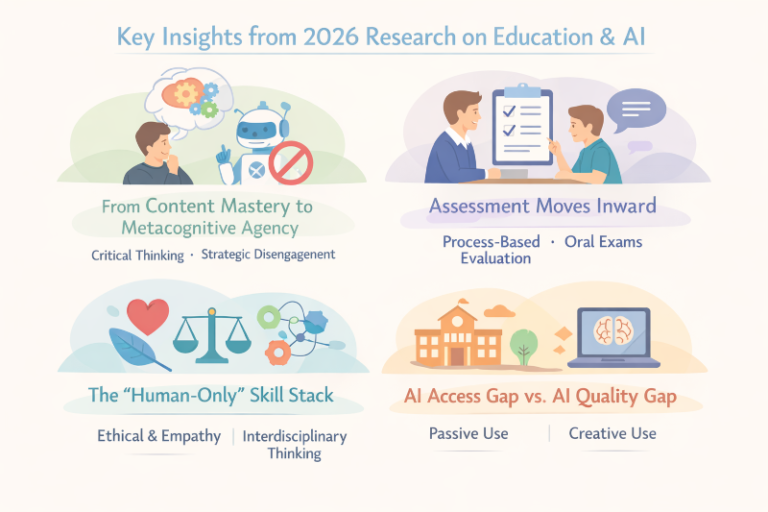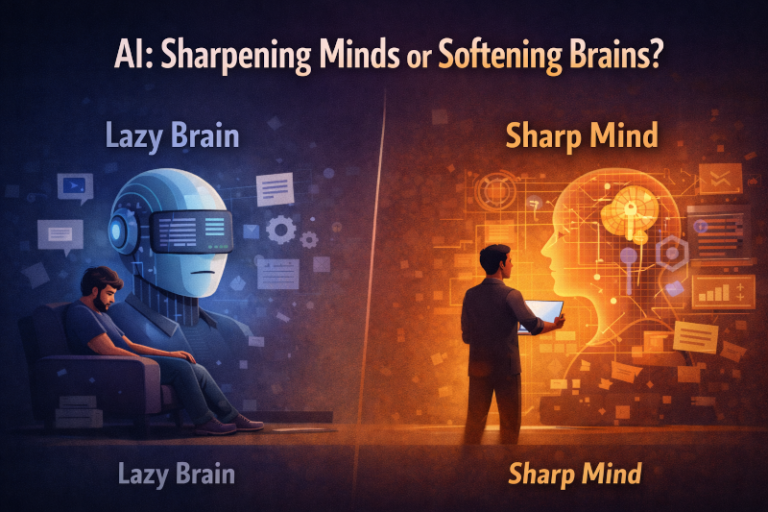

The integration of Artificial Intelligence into daily life has sparked a “cognitive tug-of-war.” While these tools enhance our productivity, researchers are increasingly concerned with how they reshape the biological and functional architecture of the human mind. The following highlights capture the core takeaways from recent scholarly discourse on this evolution.
1. The Paradox of Cognitive Offloading
The most immediate impact of AI is the reduction of “cognitive friction.” By delegating routine tasks—like scheduling, summarizing, or coding—to AI, humans experience a significant reduction in mental load. However, this comes at a cost. Studies suggest a “use it or lose it” trajectory for foundational skills. When we stop performing the mental heavy lifting of deconstructing complex problems, we risk cognitive atrophy. This is particularly evident in critical thinking; users who rely heavily on AI outputs tend to develop “algorithmic bias,” where they stop questioning the logic of the machine, leading to a decline in independent analytical rigor.
2. Memory and the “Google Effect” 2.0
We have long known that the internet changed our memory from remembering information to remembering where to find it. AI takes this a step further. We are moving toward Generative Memory, where we no longer feel the need to store data at all, trusting AI to reconstruct or “hallucinate” the necessary context on demand. Neurobiological research indicates that chronic reliance on these external processors is linked to decreased gray matter density in the hippocampus—the brain’s command center for memory and spatial navigation. Essentially, by outsourcing our memories, we may be physically thinning the parts of the brain that house them.
3. The Homogenization of Creativity
AI is a powerful “floor-raiser” but a potential “ceiling-lowerer.” For individuals with lower baseline skills, AI boosts creative output significantly. However, at a collective level, researchers warn of social signaling and homogenization. Because LLMs are trained on existing data distributions, they favor the “average” or “most likely” outcome. As more people use AI to brainstorm, the pool of human ideas may become narrower and more uniform, stifling the outliers and “divine accidents” that typically drive true cultural and scientific breakthroughs.
4. Attention Fragmentation and Decision Fatigue
The speed of AI-driven environments demands rapid-fire task switching, which contributes to attentional overload. While we may feel more productive, the constant stream of AI-generated suggestions creates a state of “continuous partial attention.” This fragmentation makes deep, focused work—the kind required for complex problem-solving—nearly impossible. Furthermore, the sheer volume of choices and data points provided by AI can lead to decision fatigue, where the human user becomes paralyzed or apathetic, eventually deferring all agency to the algorithm.
Summary: Resilience vs. Reliance
The consensus among scholars is that AI is neither a pure “enhancer” nor a pure “detractor.” It is a tool that requires metacognitive awareness. To maintain cognitive resilience, users must practice “intentional friction”—choosing to perform certain tasks manually to keep neural pathways firing—while using AI for high-level synthesis.
References
- Gerlich, M. (2025). AI tools in society: Impacts on cognitive offloading and the future of critical thinking. Societies, 15(1), 1–28. https://doi.org/10.4103/tcmj.tcmj_71_20 (Note: DOI provided in source results).
- Gesnot, R. (2025). The impact of artificial intelligence on human thought. arXiv. https://doi.org/10.48550/arxiv.2508.16628
- Hoskins, A. (2024). AI and memory. Memory, Mind & Media, 3. https://doi.org/10.1017/mem.2024.16
- Singh, A., Taneja, K., Guan, Z., & Ghosh, A. (2025). Protecting human cognition in the age of AI. arXiv. https://doi.org/10.48550/arxiv.2502.12447
- Valenzuela, A., Puntoni, S., Hoffman, D., Castelo, N., De Freitas, J., Dietvorst, B., et al. (2024). How artificial intelligence constrains the human experience. Journal of the Association for Consumer Research, 9(3), 241–256. https://doi.org/10.1086/730709