Cybersecurity Governance: Turning Risk Into Decisions
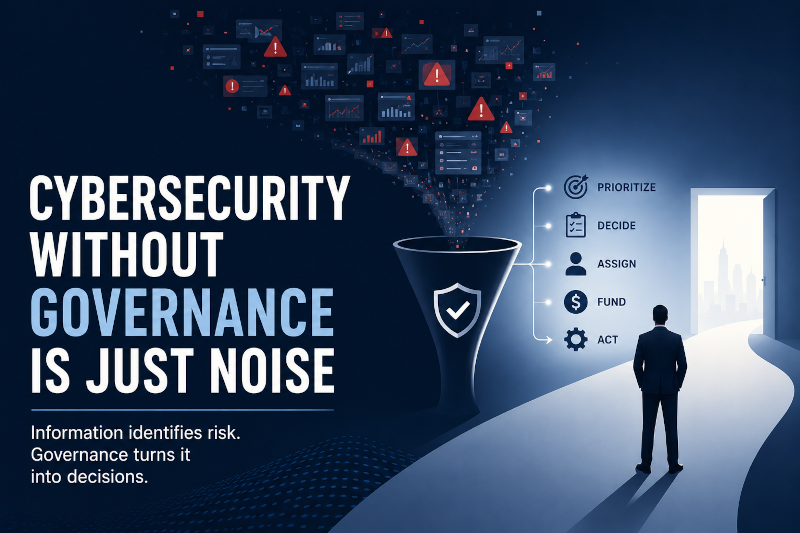
Recommendations Organizations have never had more cybersecurity information at their disposal. Security teams monitor thousands of alerts each day. Vulnerability scanners continuously identify weaknesses across environments. Threat intelligence feeds provide real-time information about emerging threats. Risk assessments generate findings, recommendations, and action plans. Executive dashboards provide visibility into security metrics that would have been impossible … Read more
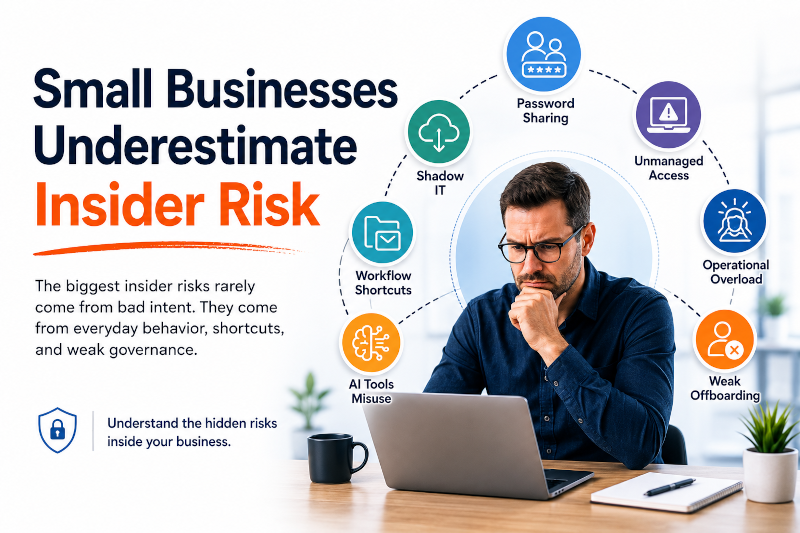
Small Businesses Underestimate Insider Risk

Recommendations Small businesses often imagine insider threats as dramatic security events involving malicious employees stealing customer databases, sabotaging systems, or intentionally leaking sensitive information. While those incidents do happen, they are far less common than the quieter operational behaviors that create insider risk every day inside normal business workflows. In reality, many insider incidents emerge … Read more

Why Employees Circumvent Security Policies

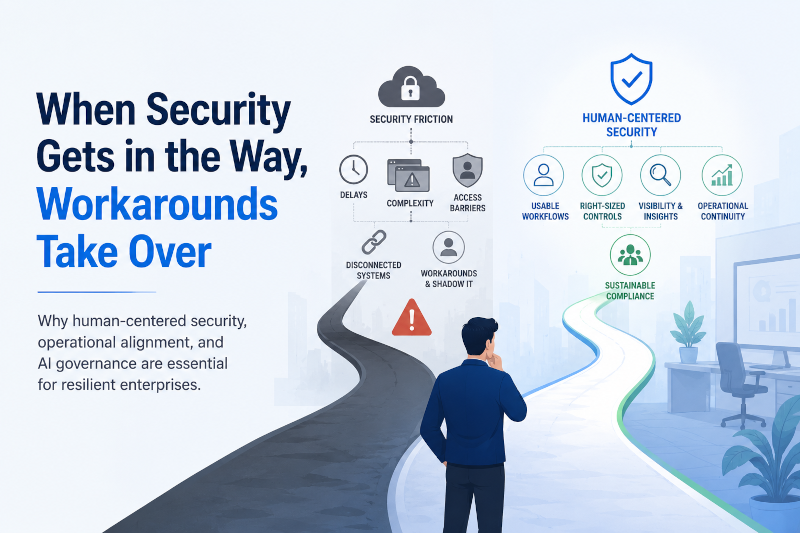
Recommendations Security Policies Often Fail Operationally Most organizations assume employees bypass security policies because they are careless, resistant to compliance, or insufficiently trained. In reality, the issue is often far more operational than behavioral. Modern employees work inside environments defined by constant notifications, fragmented workflows, meeting overload, remote coordination, and continuous pressure to maintain execution … Read more

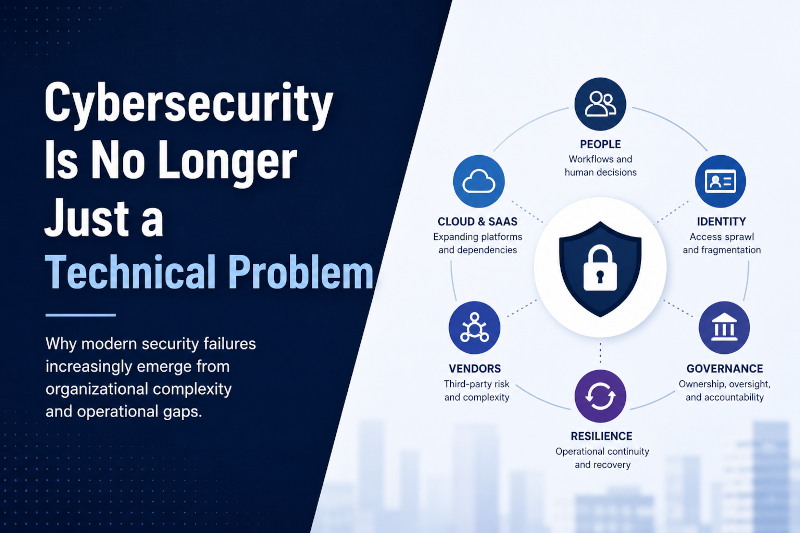
Cybersecurity Is No Longer Just a Technical Problem

Recommendations For decades, organizations primarily treated cybersecurity as a technical discipline. Security teams focused on firewalls, endpoint protection, malware detection, network segmentation, and vulnerability management. Most cyber incidents were framed as technical failures requiring technical solutions. That model no longer reflects how modern organizations actually operate. Today’s enterprise environments are deeply interconnected systems involving cloud … Read more

Your Identity System Is Held Together by Duct Tape

Recommendations Why Identity Architecture Has Become One of the Enterprise’s Largest Sources of Technical Debt Walk into almost any enterprise IT department and ask a simple question: “Can you explain how every employee, contractor, application, API, cloud workload, and AI agent receives—and eventually loses—access across the organization?” Very few people can answer with complete confidence. … Read more

The Death of the IT Perimeter: Why Security Is Now Identity-First

Recommendations The IT perimeter didn’t disappear overnight. It dissolved gradually, almost unnoticed. For years, organizations expanded their technology footprint beyond the walls of the corporate office. Applications moved to the cloud. Employees began working from home, airports, and customer sites. Software-as-a-Service (SaaS) platforms replaced on-premises applications, and business partners started accessing internal systems through APIs … Read more

The Silent Burnout Crisis in IT: The Cost of Perpetual Firefighting

Recommendations At 11:47 PM on a Thursday, a senior systems engineer receives yet another alert. A critical application has gone offline. Within minutes, a familiar pattern unfolds: conference bridges are opened, Slack channels become active, and a handful of individuals begin working through what has become a routine crisis. By Friday morning, the issue is … Read more

Your Biggest Cybersecurity Risk May Not Be Inside Your Network

Recommendations Most organizations have spent years strengthening internal cybersecurity defenses. They deploy endpoint detection systems, identity management platforms, multi-factor authentication, zero trust architectures, cloud monitoring tools, and AI-assisted threat detection environments. In many enterprises, internal cybersecurity maturity has improved substantially over the last decade. And yet, attackers are increasingly bypassing those defenses altogether. They are … Read more

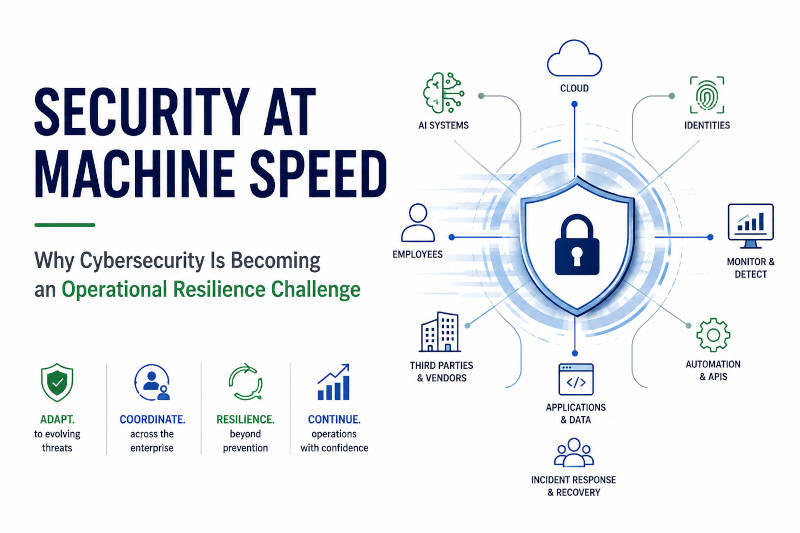
Security at Machine Speed: Why Cybersecurity Is Becoming an Operational Resilience Challenge

Recommendations Cybersecurity Has Entered a Machine-Speed Era For years, many organizations approached cybersecurity primarily as a technical discipline focused on perimeter defense, endpoint protection, vulnerability management, and compliance controls. Those capabilities still matter. But the operational environment entering 2026 looks fundamentally different from the landscape most enterprises were originally designed to manage. Cyber risk no … Read more

The 2025 Cybersecurity Pivot: Managing the “Machine-Speed” Threat Landscape

Recommendations Cybersecurity Is Becoming an Operational Systems Problem Enterprise cybersecurity is no longer defined primarily by firewalls, endpoint software, or perimeter defense models. In modern cloud and hybrid environments, identity increasingly functions as the core security boundary, while operational coordination determines how effectively organizations respond when those boundaries fail. This shift is changing the nature … Read more