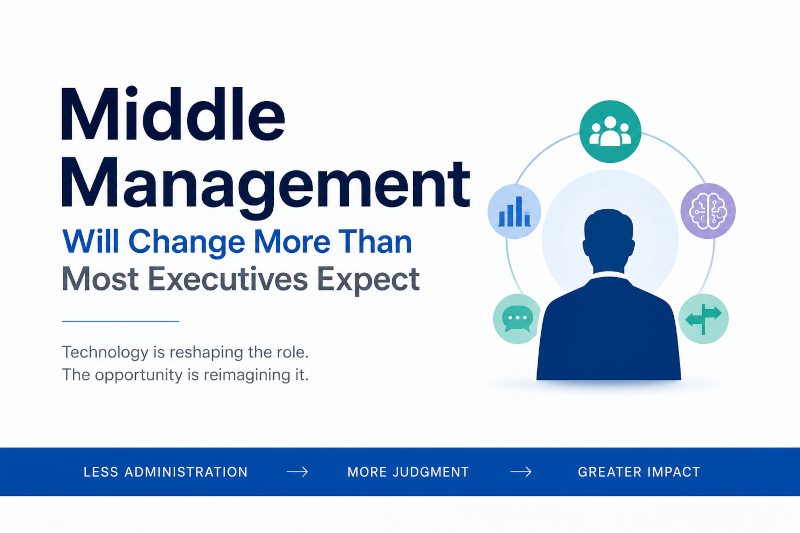
Middle Management Will Change More Than Most Executives Expect

Recommendations For years, conversations about artificial intelligence and workforce transformation have focused on frontline employees. Organizations debate whether customer service representatives will become more productive, whether analysts will automate portions of their work, and whether administrative roles will shrink as AI tools become more capable. Those discussions dominate conference agendas, executive briefings, and media coverage. … Read more

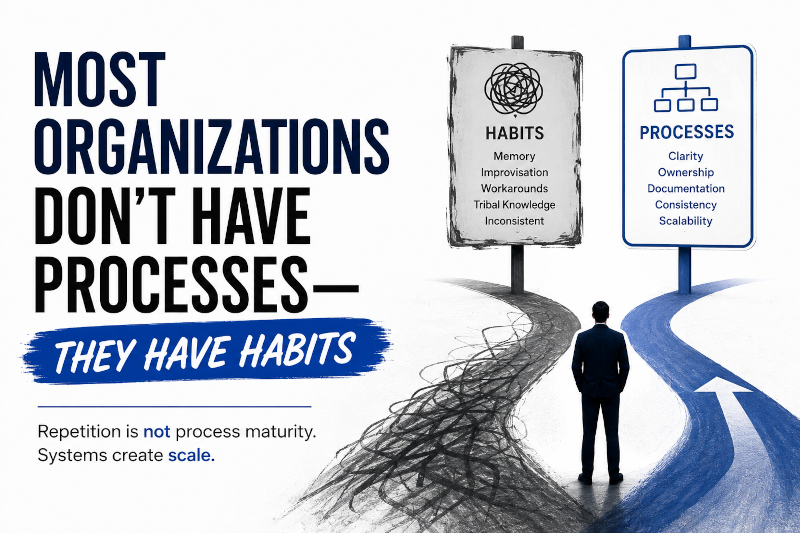
Most Organizations Don’t Have Processes — They Have Habits

Recommendations Many organizations believe they operate through structured processes. In reality, many operate through repeated habits that happen to work well enough under stable conditions. Work gets completed because certain employees remember what to do, experienced managers know who to contact, teams improvise around gaps quietly, and institutional memory compensates for missing operational clarity. This … Read more

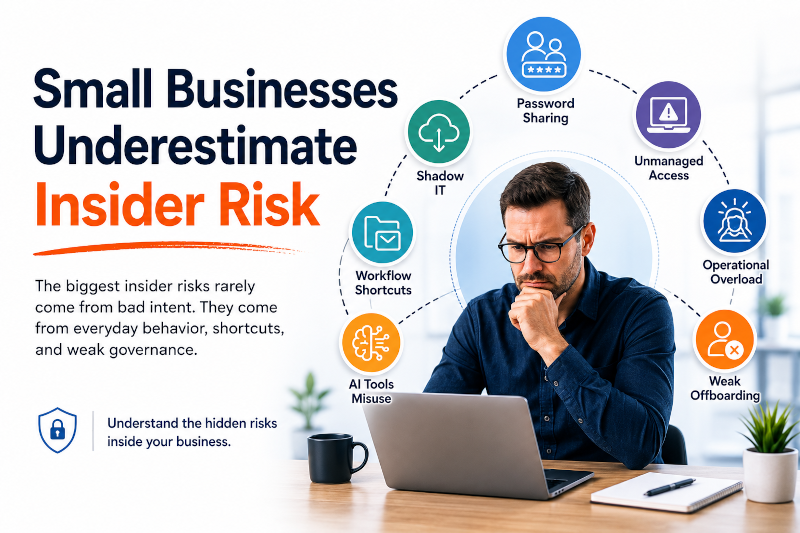
Small Businesses Underestimate Insider Risk

Recommendations Small businesses often imagine insider threats as dramatic security events involving malicious employees stealing customer databases, sabotaging systems, or intentionally leaking sensitive information. While those incidents do happen, they are far less common than the quieter operational behaviors that create insider risk every day inside normal business workflows. In reality, many insider incidents emerge … Read more

Cloud Migration Risks Most Companies Ignore

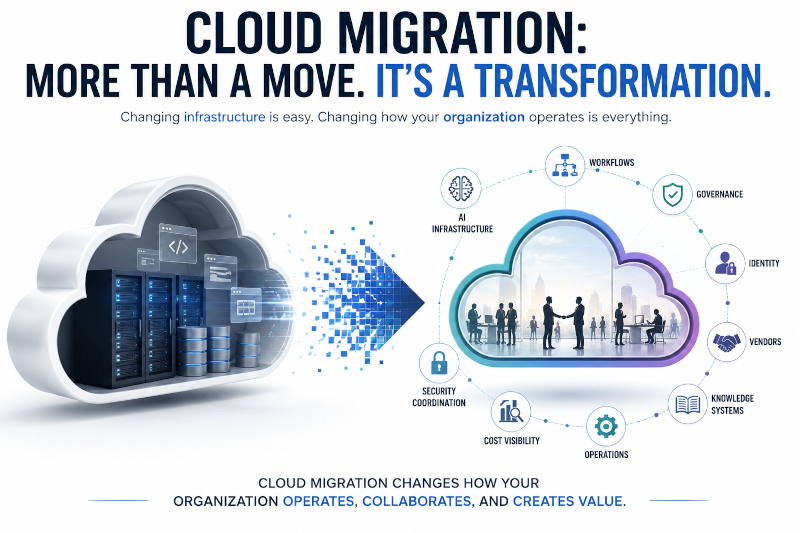
Recommendations Cloud migration is often framed as a technology modernization initiative. Organizations discuss scalability, elasticity, infrastructure efficiency, and cloud-native transformation as though migration is primarily a technical challenge. In practice, cloud migration is usually an operational transformation disguised as an infrastructure project. The systems themselves are often easier to move than the workflows, governance structures, … Read more

Why Employees Circumvent Security Policies

Recommendations Security Policies Often Fail Operationally Most organizations assume employees bypass security policies because they are careless, resistant to compliance, or insufficiently trained. In reality, the issue is often far more operational than behavioral. Modern employees work inside environments defined by constant notifications, fragmented workflows, meeting overload, remote coordination, and continuous pressure to maintain execution … Read more

The Hidden Cost of Manual Internal Processes

Recommendations Manual Internal Processes Quietly Shape Enterprise Performance Most organizations still think about manual internal processes primarily as productivity inefficiencies. Employees spend time updating spreadsheets, chasing approvals, forwarding emails, reconciling systems, copying data between platforms, or coordinating work through fragmented communication channels. These tasks are often treated as operational inconveniences rather than structural business risks. … Read more

The Future of Operational Intelligence in AI-Driven Organizations

Recommendations Operational Intelligence Is Becoming Enterprise Infrastructure Most organizations still think about operational intelligence primarily as a reporting function where dashboards are created, KPIs are tracked, business intelligence systems generate analytics, and executives review summaries during scheduled meetings. But operational intelligence is gradually evolving into something much larger. In modern enterprises, operational intelligence increasingly refers … Read more

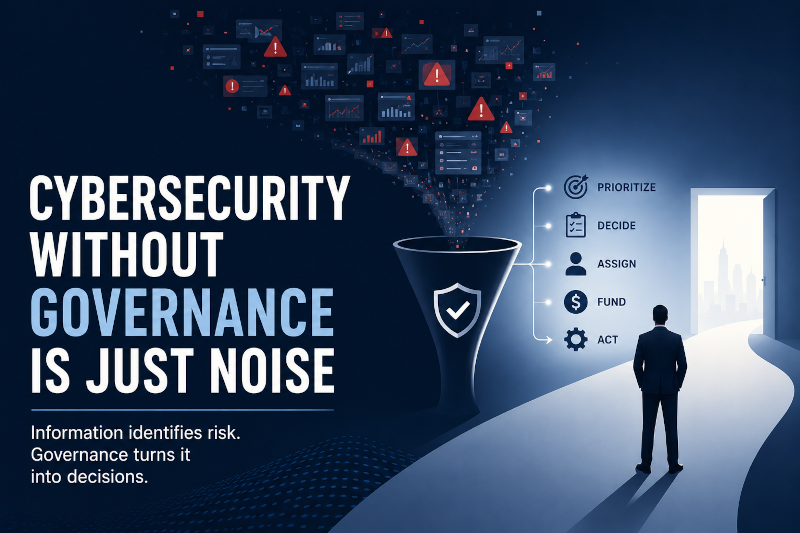
Cybersecurity Is No Longer Just a Technical Problem

Recommendations For decades, organizations primarily treated cybersecurity as a technical discipline. Security teams focused on firewalls, endpoint protection, malware detection, network segmentation, and vulnerability management. Most cyber incidents were framed as technical failures requiring technical solutions. That model no longer reflects how modern organizations actually operate. Today’s enterprise environments are deeply interconnected systems involving cloud … Read more

Why Organizational Memory Matters More Than Ever in the AI Era

Most organizations are currently focused on adopting AI tools. Far fewer are evaluating whether their organizational knowledge systems are capable of supporting AI effectively. That distinction matters more than many leaders initially realized. AI systems are not independent sources of organizational intelligence. They depend heavily on the quality, accessibility, structure, and consistency of the information … Read more

How High-Performing Organizations Reduce Operational Friction

Most organizations are not slowed by one catastrophic operational failure. They are slowed by accumulated friction. A delayed approval.An unclear workflow.A missing document.An unnecessary meeting.A decision waiting three days for validation.A process that requires employees to navigate six disconnected systems to complete one task. Individually, these inefficiencies may appear minor. Collectively, they create operational drag … Read more