You’re Paying for Licenses No One Uses—And It’s Draining Your Budget

Recommendations There’s a category of waste inside most organizations that rarely creates urgency because, on paper, everything appears normal. Software licenses renew automatically, contracts feel predictable, applications are officially approved, users remain assigned active seats, and dashboards continue showing adoption activity. From a leadership perspective, the spending appears stable and under control, which is precisely … Read more

From IT Support to Business Driver: The New Role of IT Leaders

Recommendations For most of the modern business era, IT leadership was measured primarily by stability. If systems stayed online, security incidents remained limited, and employees could access the tools they needed, technology teams were considered successful. IT functioned largely as an operational support layer behind the business itself. That definition no longer reflects reality. Today, … Read more

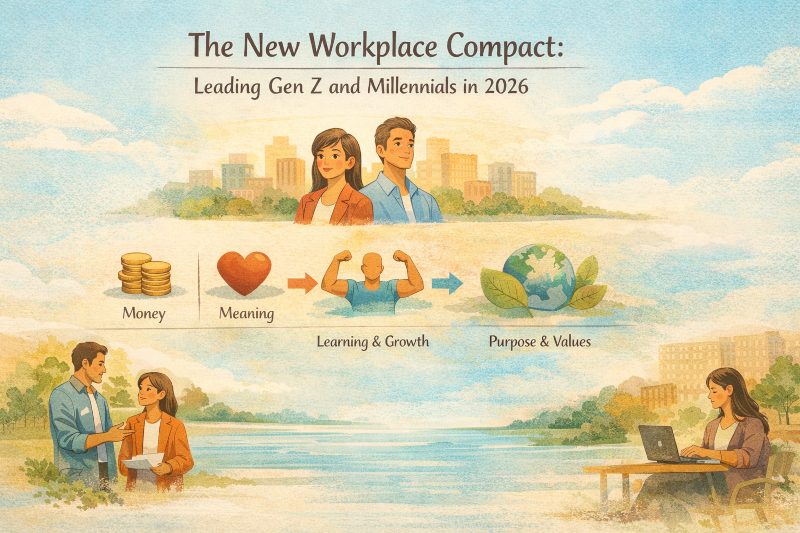
The New Workplace Compact: How Gen Z and Millennials Are Redefining Work in 2026

Recommendations The global workforce is undergoing a structural transformation that extends far beyond generational preferences or remote work debates. By the end of the decade, Gen Z and Millennials will represent the overwhelming majority of the labor market, and their expectations are reshaping how organizations think about leadership, culture, career development, and the purpose of … Read more

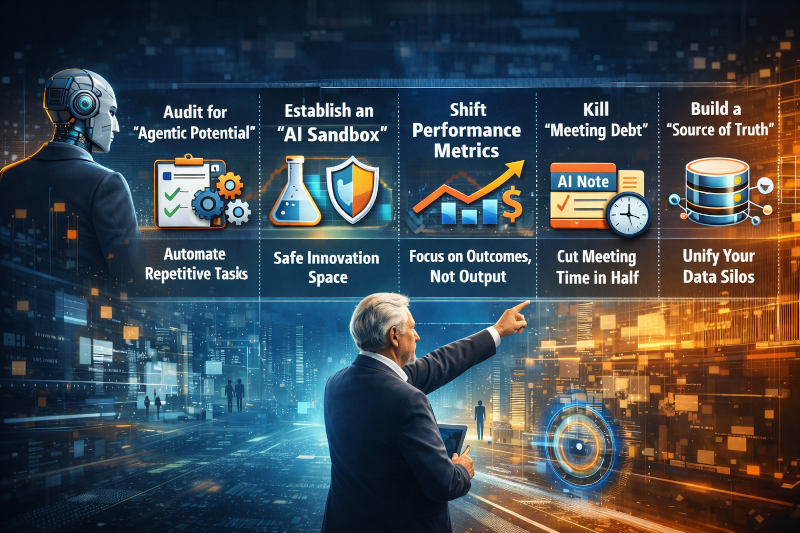
Managing the Human–Agent Hybrid Workforce: A Practical Guide for Managers in 2026

The Managerial Shift Is Already Underway Most organizations are no longer asking whether AI will influence work. That transition has already happened. The more immediate challenge facing managers in 2026 is operational: how to lead teams where human employees and AI systems work together across the same workflows. In many enterprise environments, AI agents already … Read more

From AI Hype to Operational Execution: How Enterprise Work Is Changing in 2026

Recommendations For the past several years, most organizations approached artificial intelligence through experimentation. Teams tested copilots, executives explored automation pilots, and departments deployed isolated AI tools in search of productivity gains. But across enterprise environments, the conversation is now shifting away from experimentation toward operational execution. The central question is no longer whether AI can … Read more

Why Most Technology Adoption Efforts Fail Operationally

Most organizations no longer struggle to access technology. They struggle to integrate it operationally. Modern enterprises now have access to powerful AI systems, automation platforms, analytics tools, cloud infrastructure, and digital collaboration technologies. Yet many organizations continue experiencing a widening gap between technological capability and operational execution. The issue is rarely the software itself. More … Read more

Why Traditional Work Structures No Longer Scale

The modern workplace is undergoing a structural transformation that extends far beyond remote work trends or post-pandemic flexibility debates. Organizations are increasingly discovering that many traditional work structures were designed for an industrial and administrative economy that no longer reflects how modern knowledge work actually operates. Fixed job descriptions, rigid schedules, centralized supervision, and location-dependent … Read more