Most Organizations Don’t Have Processes — They Have Habits
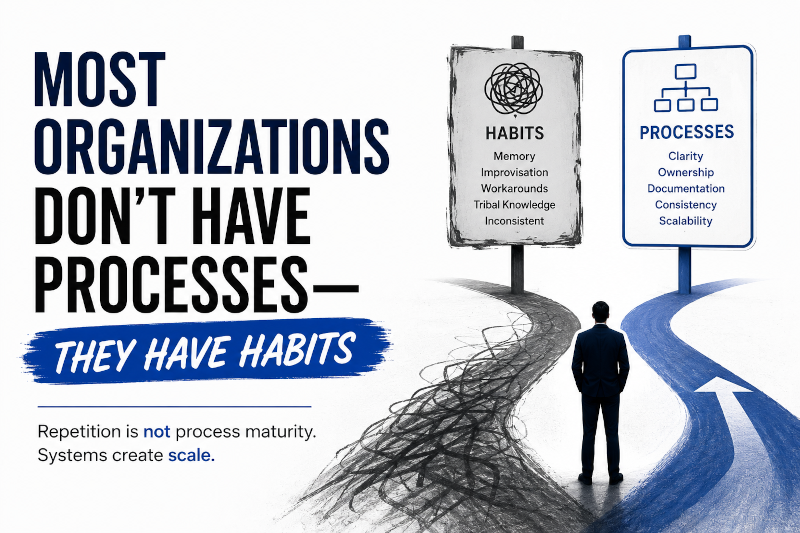
When work depends on informal habits rather than defined processes, consistency and scalability disappear as teams grow or change.
When work depends on informal habits rather than defined processes, consistency and scalability disappear as teams grow or change.
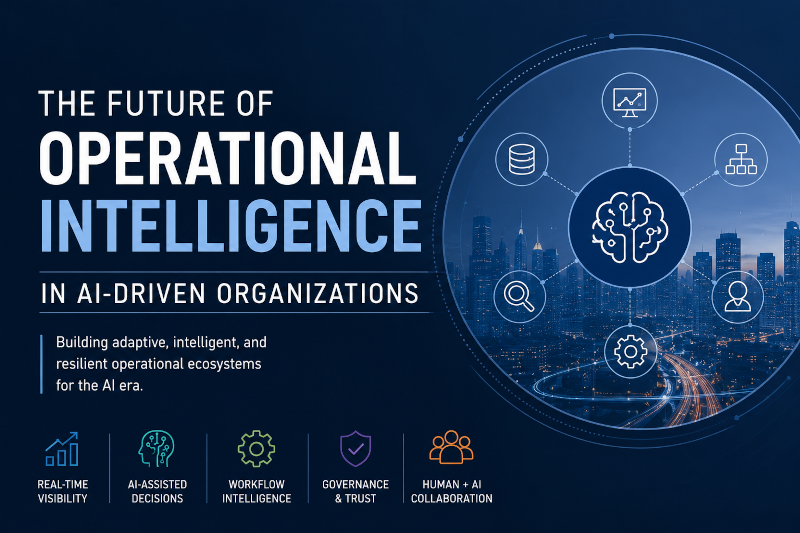
Operational intelligence connects reliable data, shared visibility, and standardized workflows to support better decisions and AI-enabled execution.

AI depends on accessible, trustworthy organizational knowledge, making knowledge governance and maintenance essential to effective adoption.
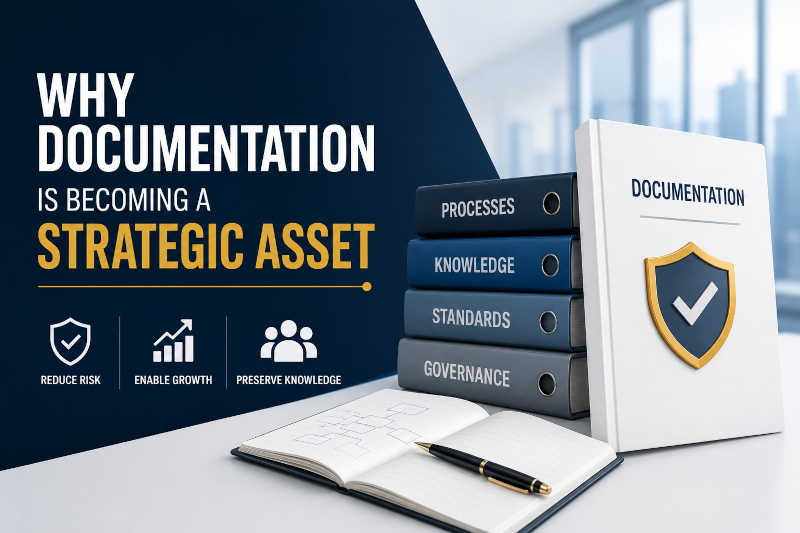
Well-maintained documentation preserves operational knowledge, supports consistent execution, and reduces dependence on individual employees.
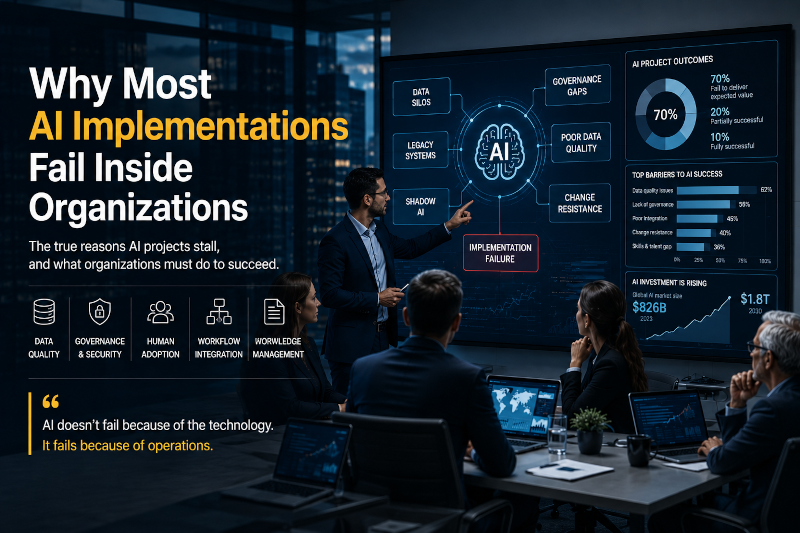
AI initiatives stall when organizations overlook workflow fit, employee adoption, governance, and measurable business outcomes.

AI exposes the real state of processes, data, documentation, and governance—making operational weaknesses harder to ignore.

Business-critical automations become a liability when ownership, logic, dependencies, and recovery procedures are poorly understood.

Onboarding automation can complete administrative tasks while leaving new hires confused about responsibilities, tools, and how work actually happens.

Multiple competing versions of critical information erode trust, create rework, and undermine decisions across the organization.

Persistent IT firefighting often signals recurring system failures, unclear processes, and preventable operational work—not simply workload.